One record, not copies
Identification, health, history, location and relationships belong to the same animal or livestock record.
UEAD connects identification, medical history, owner and professional relationships, location status and animal-welfare cases in one system.
The goal is not to make every participant maintain another separate profile. The same record can serve private, organisational and professional workflows, always with the appropriate permissions.
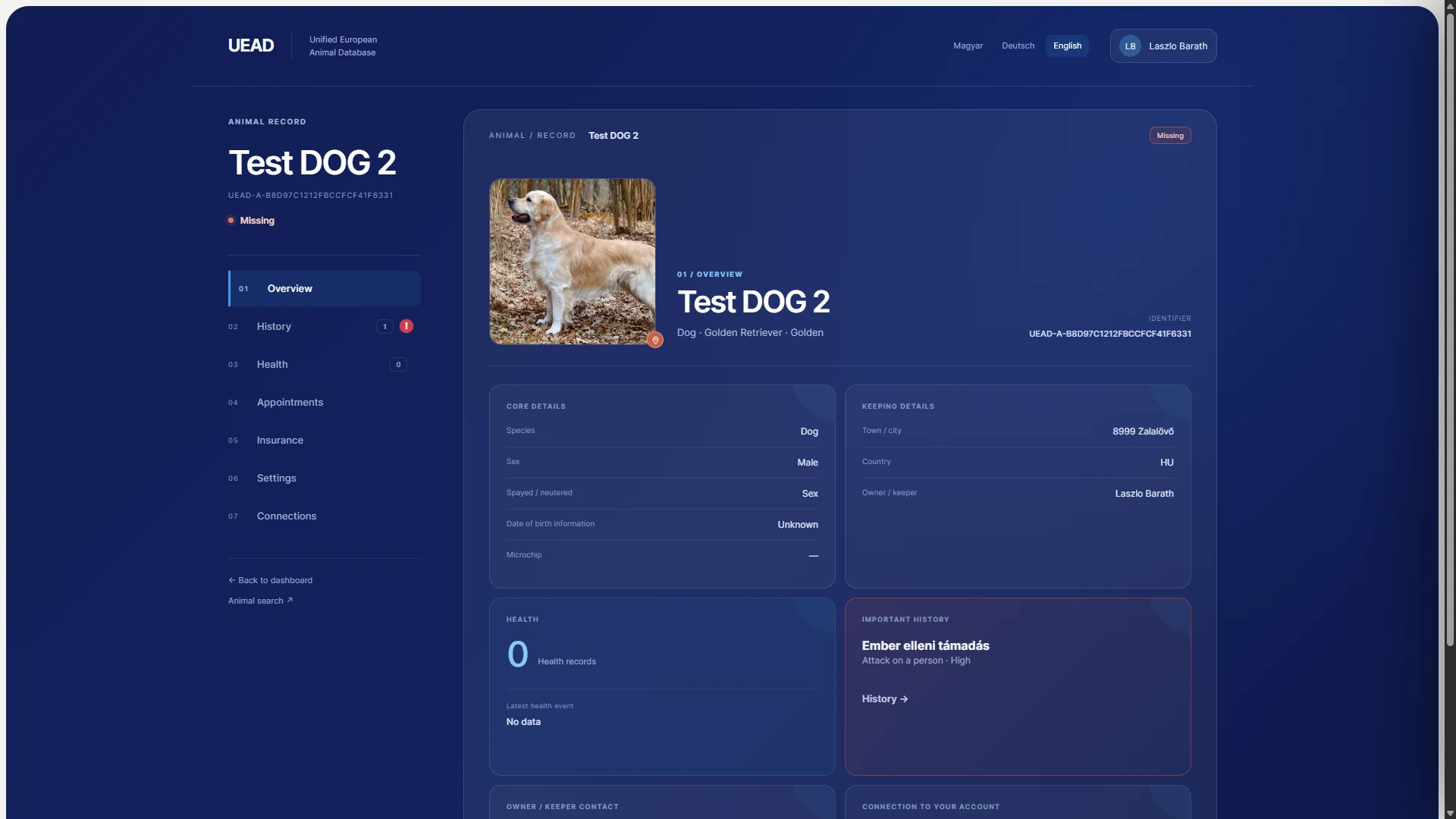
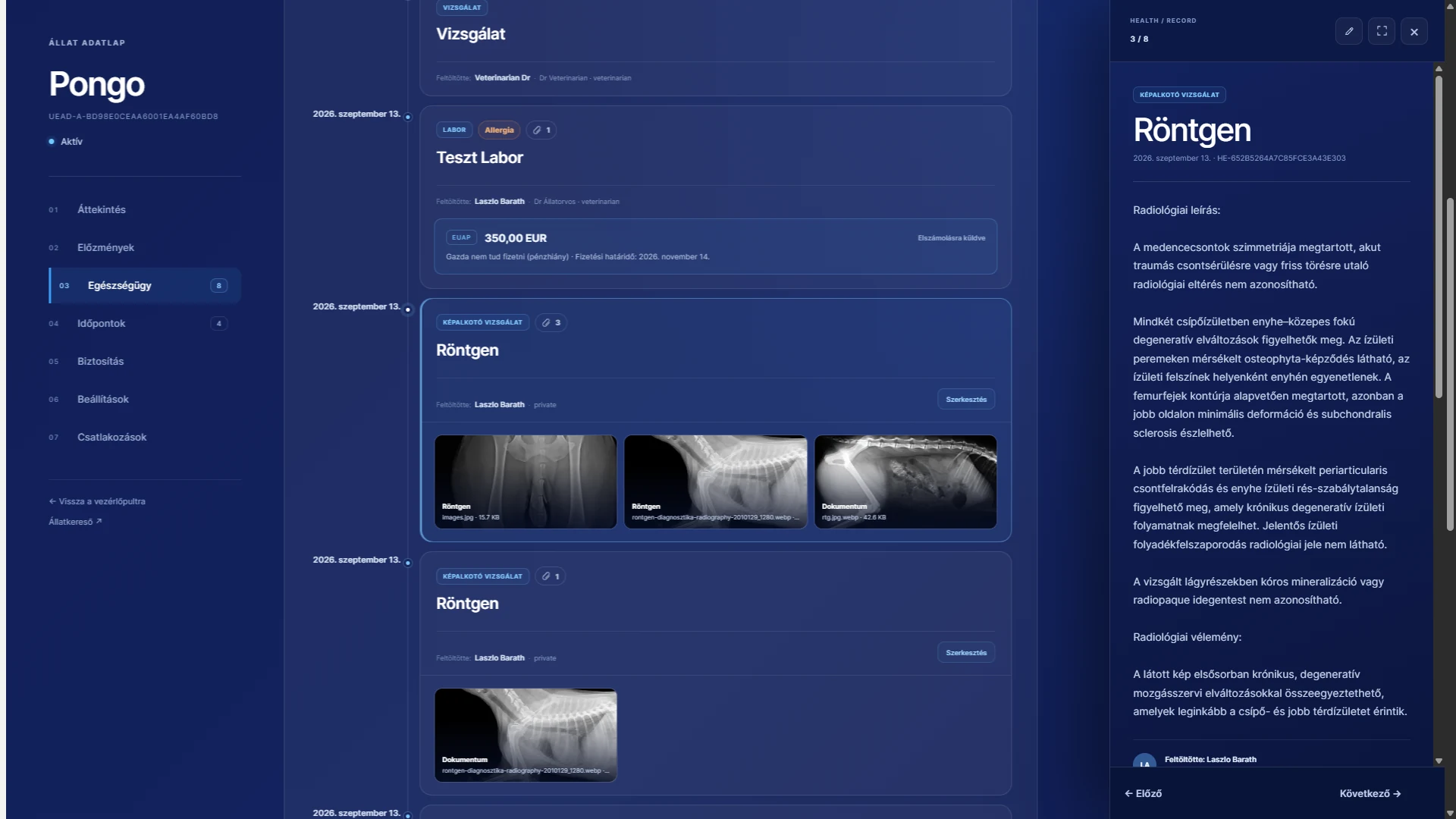
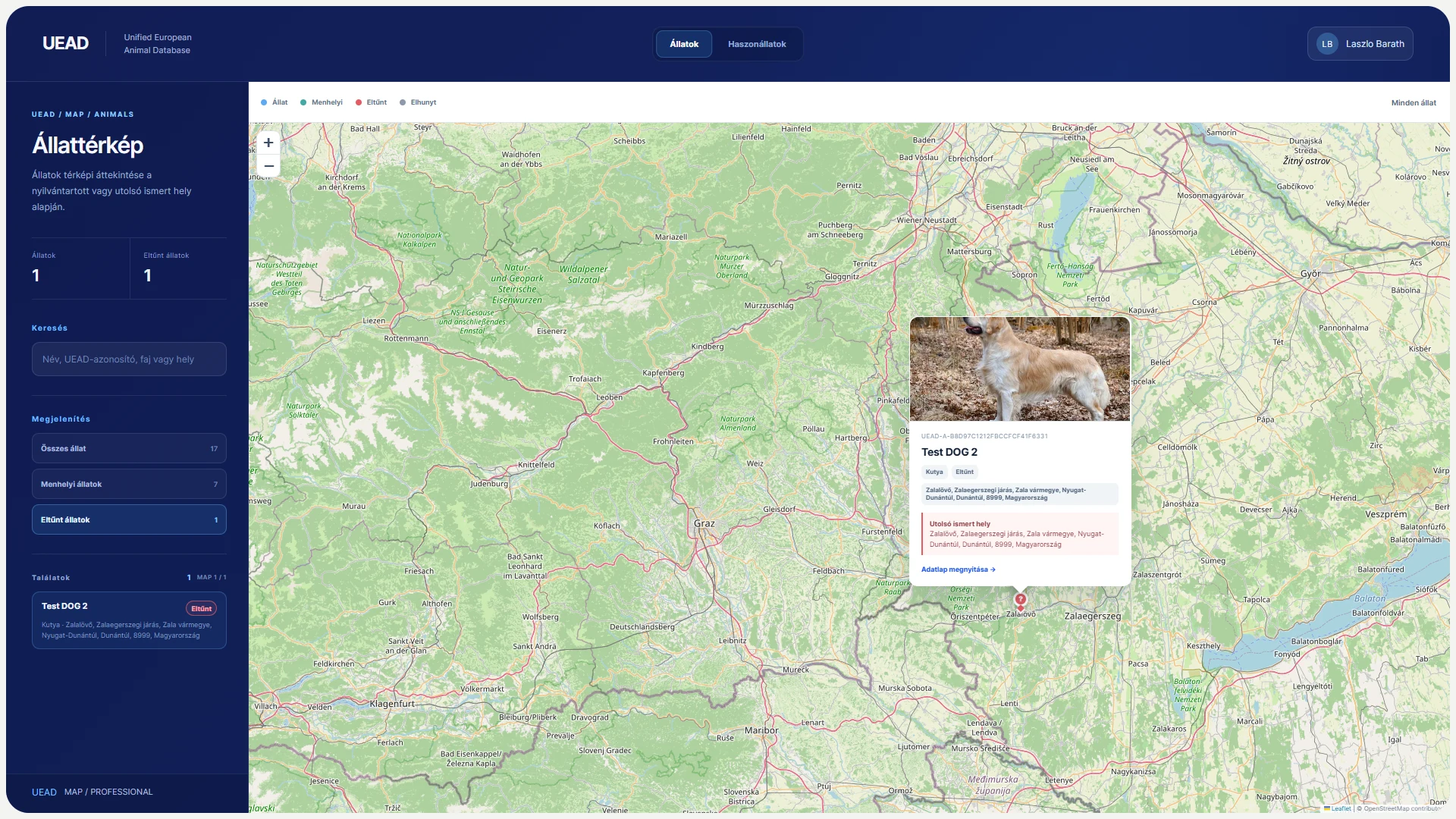
UEAD is designed to simplify the point where the same animal currently appears in several systems, several copies and with different histories. One shared record reduces re-entry, lost context and manual hand-offs.
Identification, health, history, location and relationships belong to the same animal or livestock record.
Owners, organisations and professionals can use the same record while seeing and editing only what their role allows.
A missing status, health risk, follow-up or welfare event is not isolated data: it surfaces where a decision has to be made.
The interface makes the next step clear while relationships, status logic, permissions and data flows are connected in the background.
UEAD is not differentiated by one isolated feature. Separate tools often turn every new workflow into another hand-off, reconciliation or re-entry step; here identification, health, location, relationships and cases are built on the same record.
Core animal information does not need to be rebuilt for every new workflow. Later events stay linked to the same UEAD record.
Less duplicationHealth events, missing status, history and professional relationships remain searchable as parts of the same record.
Continuous historyCollaboration does not require making everything public. Role and privacy rules decide what each participant can access.
Controlled sharingAlongside individual animals, livestock populations get their own medical, location and risk history.
One system, two scalesAuthorised data can also support external welfare, shelter and professional applications through the API.
Open ecosystemUEAD simplifies the parts of everyday work where time is usually lost: choosing data, finding the right record and documenting what happened.
For breeds, colours, locations and other complex choices, a dedicated search view helps users find the right value without digging through long lists.
Faster choicesWhen information is already known, UEAD reuses it. Quick choices and reusable relationships reduce unnecessary manual entry.
Less administrationLonger descriptions and professional notes can be dictated, making documentation faster in the field, during an examination or on mobile.
Faster documentationThe interface keeps the information needed for the current task in focus, while less frequently used details stay out of the way.
Logical workflowA UEAD record keeps the essentials together from identification through everyday events, missing status and the end of the lifecycle. New situations extend the same history instead of creating disconnected profiles.
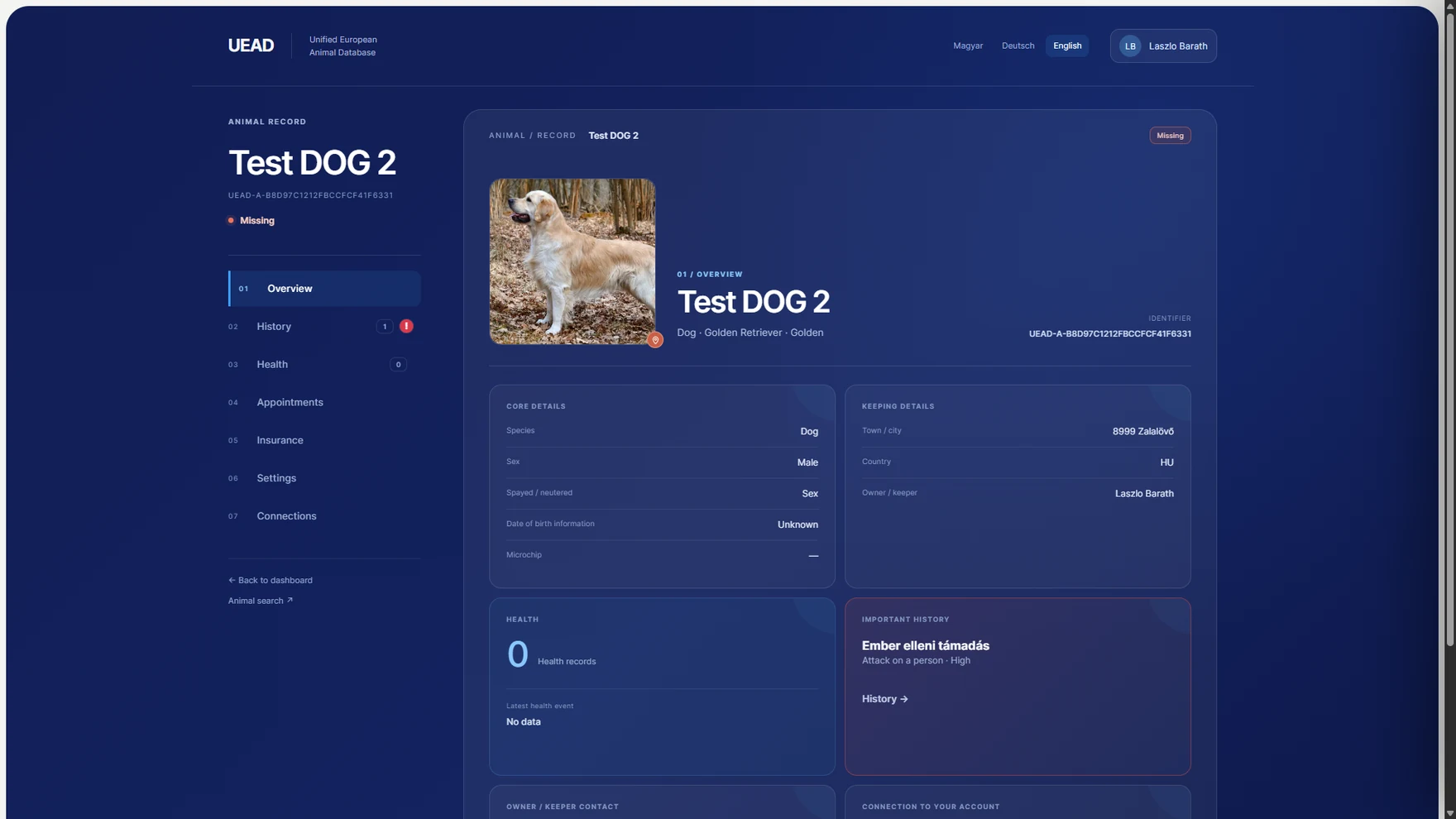
Examinations, diagnoses, treatments and documents remain in chronological context. A quick overview can open directly into the complete report or image set.
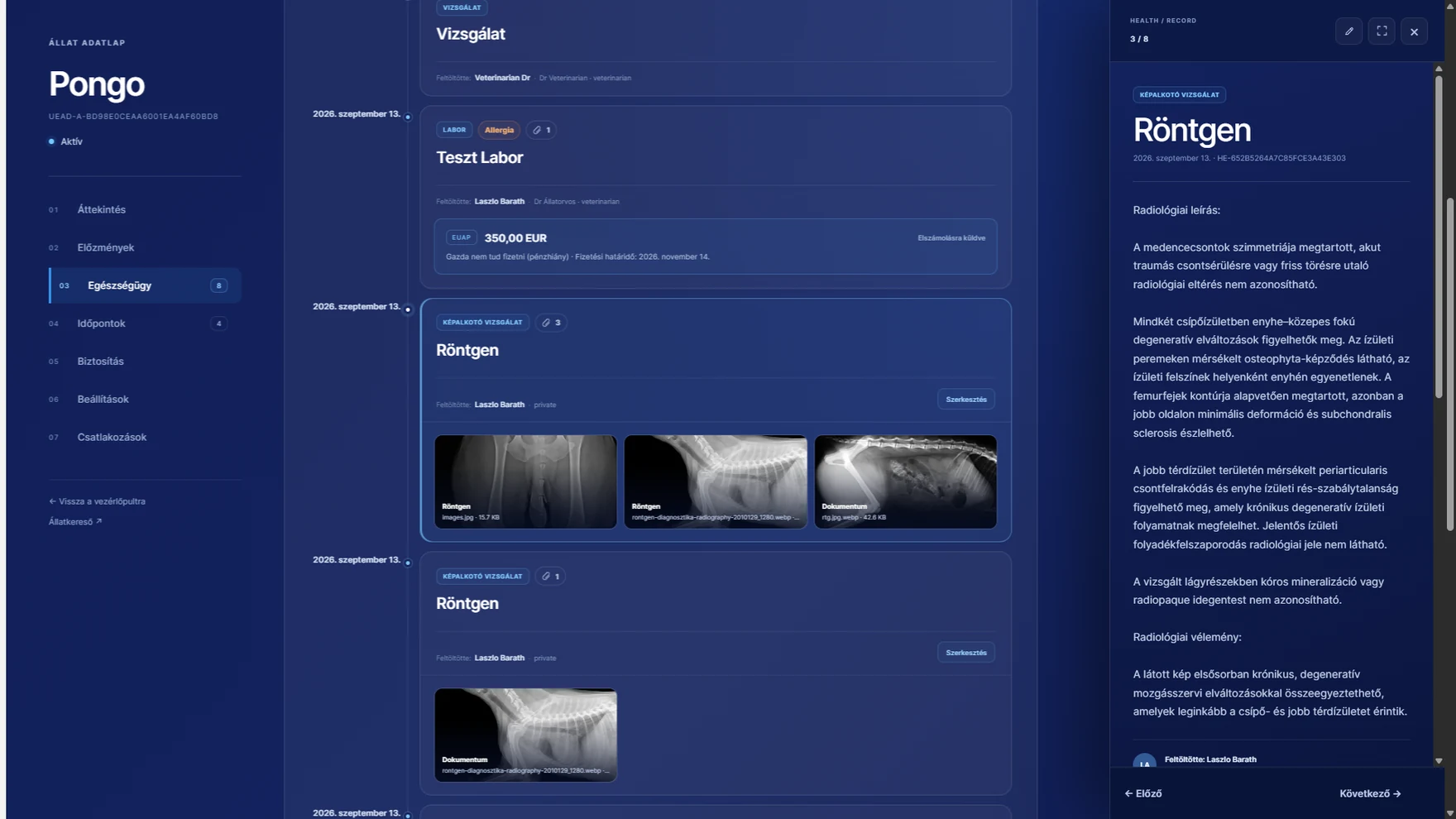
UEAD is not a set of disconnected modules. Its main interfaces are different views of the same animal journey.

Identification, owner relationship, appearance and photo start as one structured animal record.
Examinations, diagnoses, treatments, images and documents stay in chronological context.
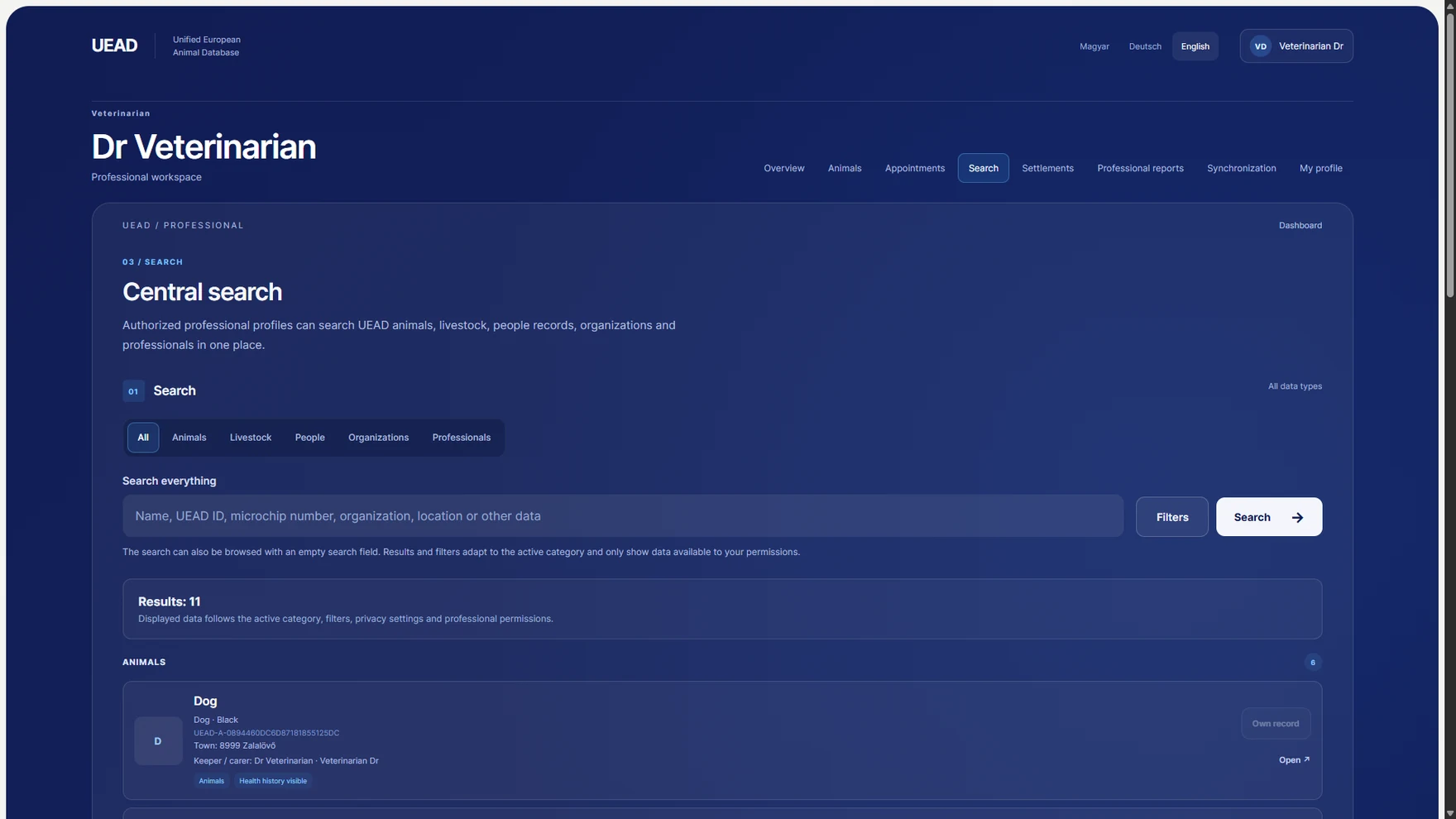
Authorised professionals can find the needed record and the data available to their role in the same system.
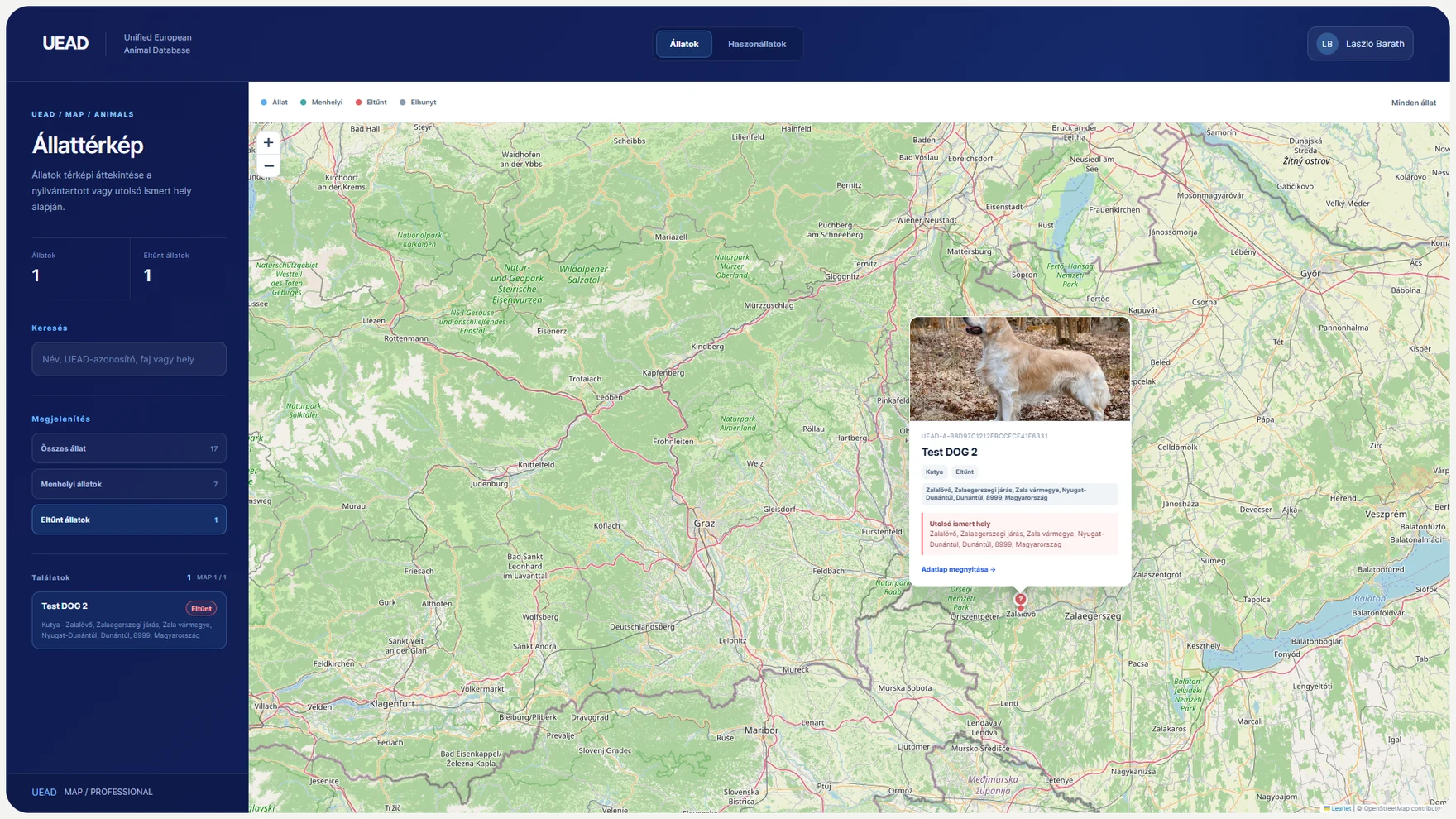
A missing animal’s last known location or livestock health risk can also be understood geographically.
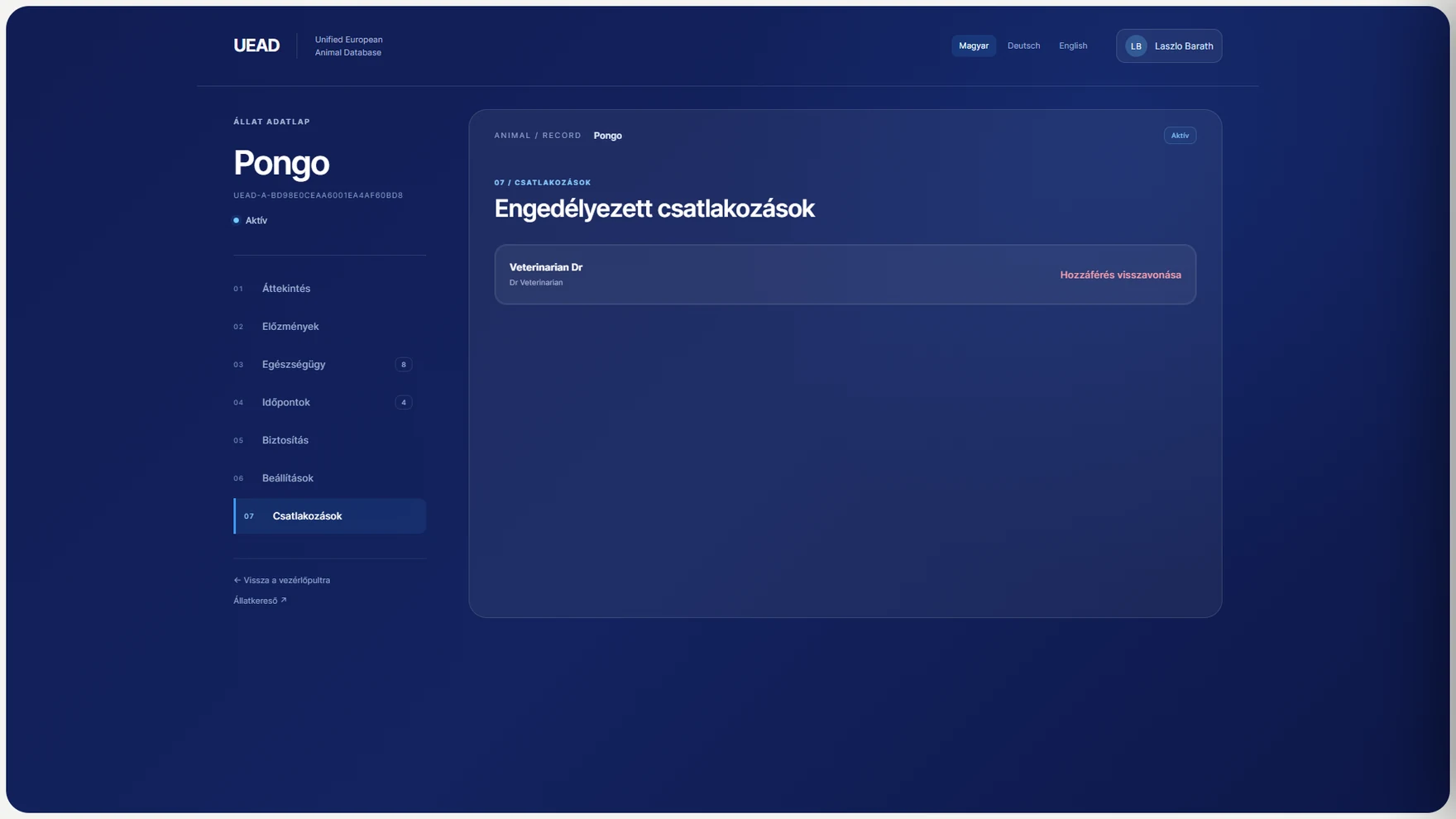
Owners can control professional connections, and previously granted access can be revoked later.
A serious history event or health risk does not stay buried deep in a profile. UEAD can surface relevant warnings in the places where people actually need to act.
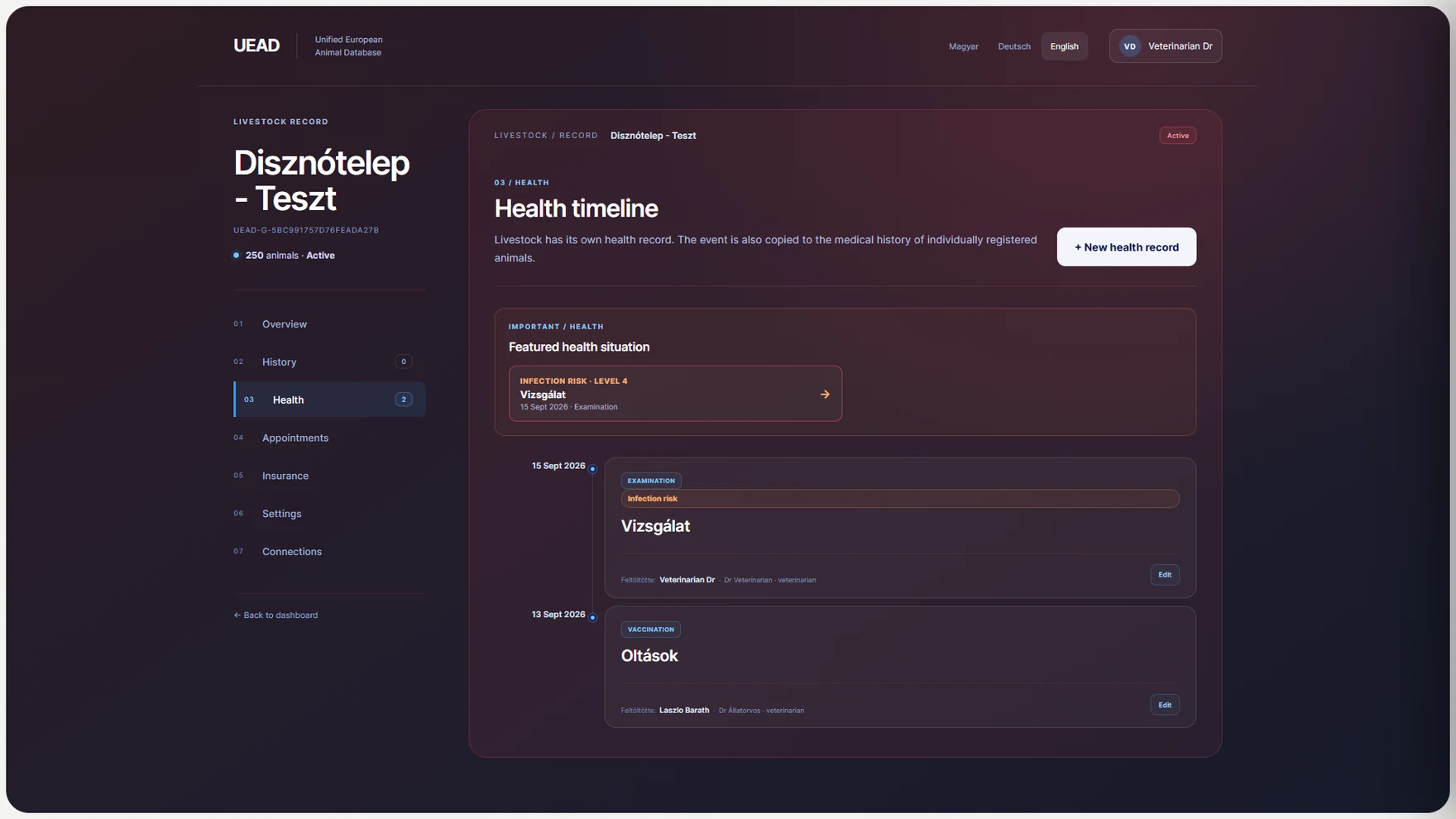
UEAD also supports cases where individual registration is not practical. A livestock population receives its own record, medical history, holding location and risk state.
The map turns record locations into operational context. Missing animals, shelter animals and livestock health risks can be filtered separately and compared geographically.
Professional profiles can search and connect to the records they need while owner privacy and role-based access remain in force.
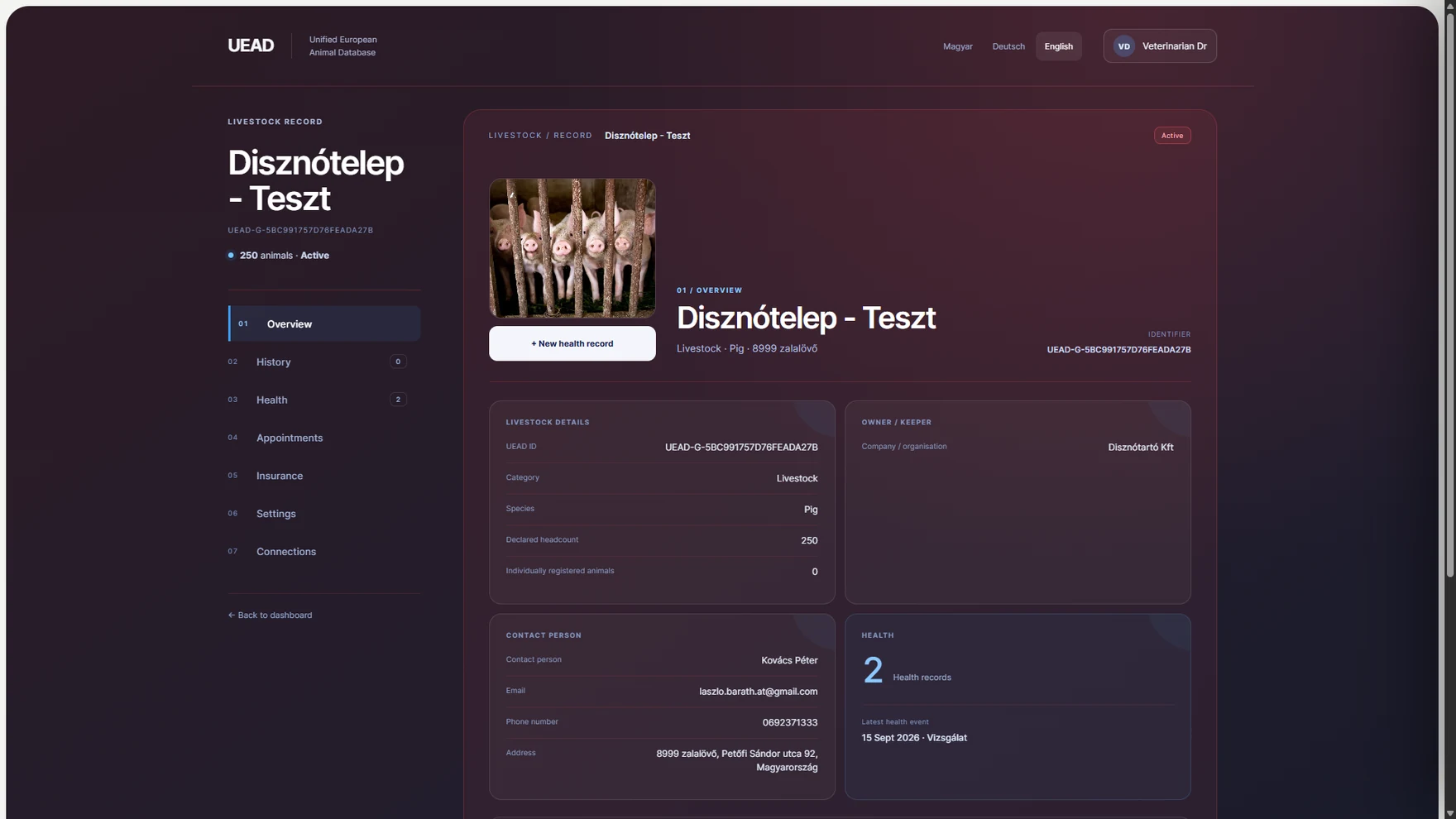
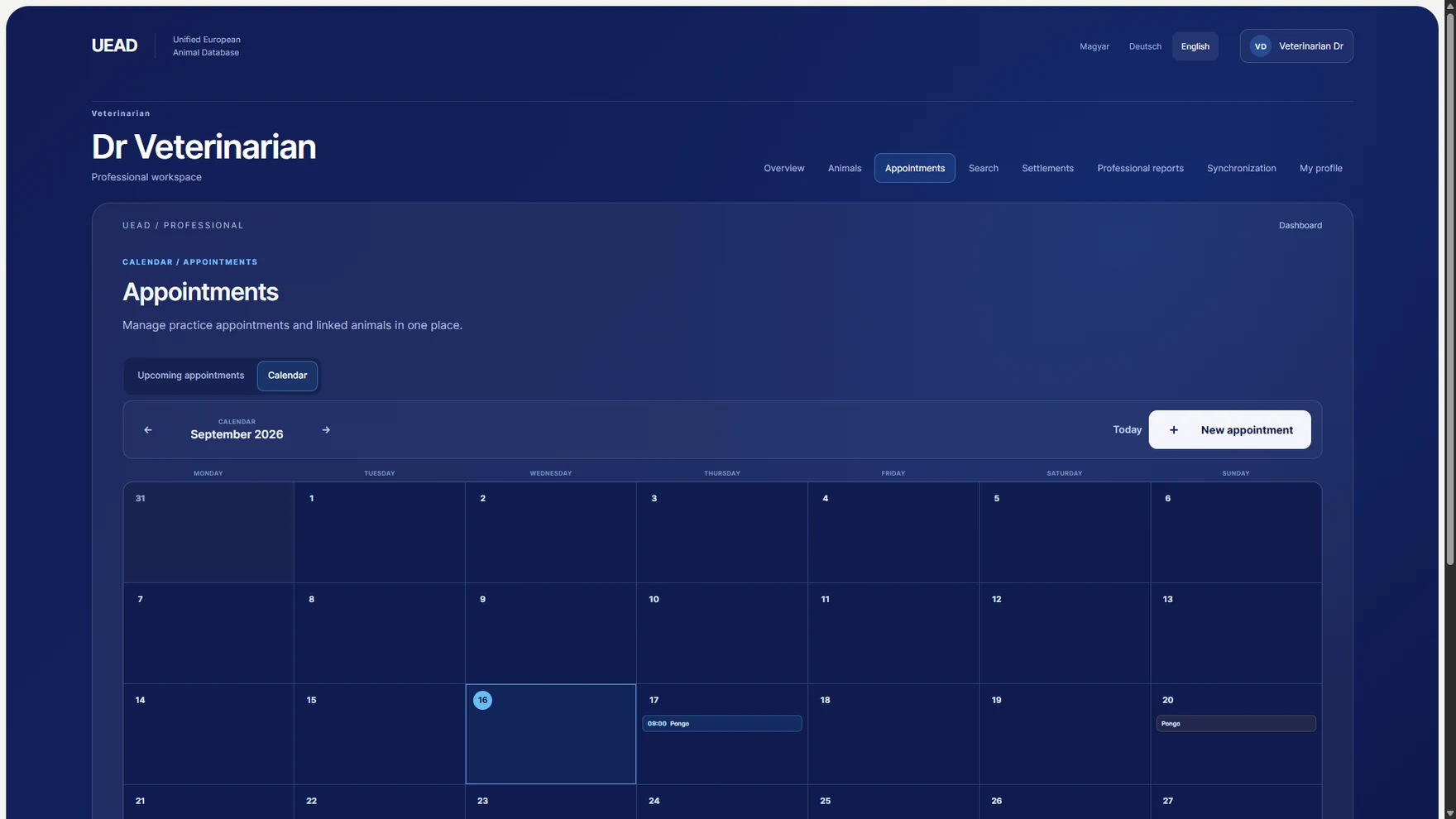
Appointments, medical entries and animal records are not treated as unrelated tasks. UEAD is designed so that the next action naturally follows the previous one.
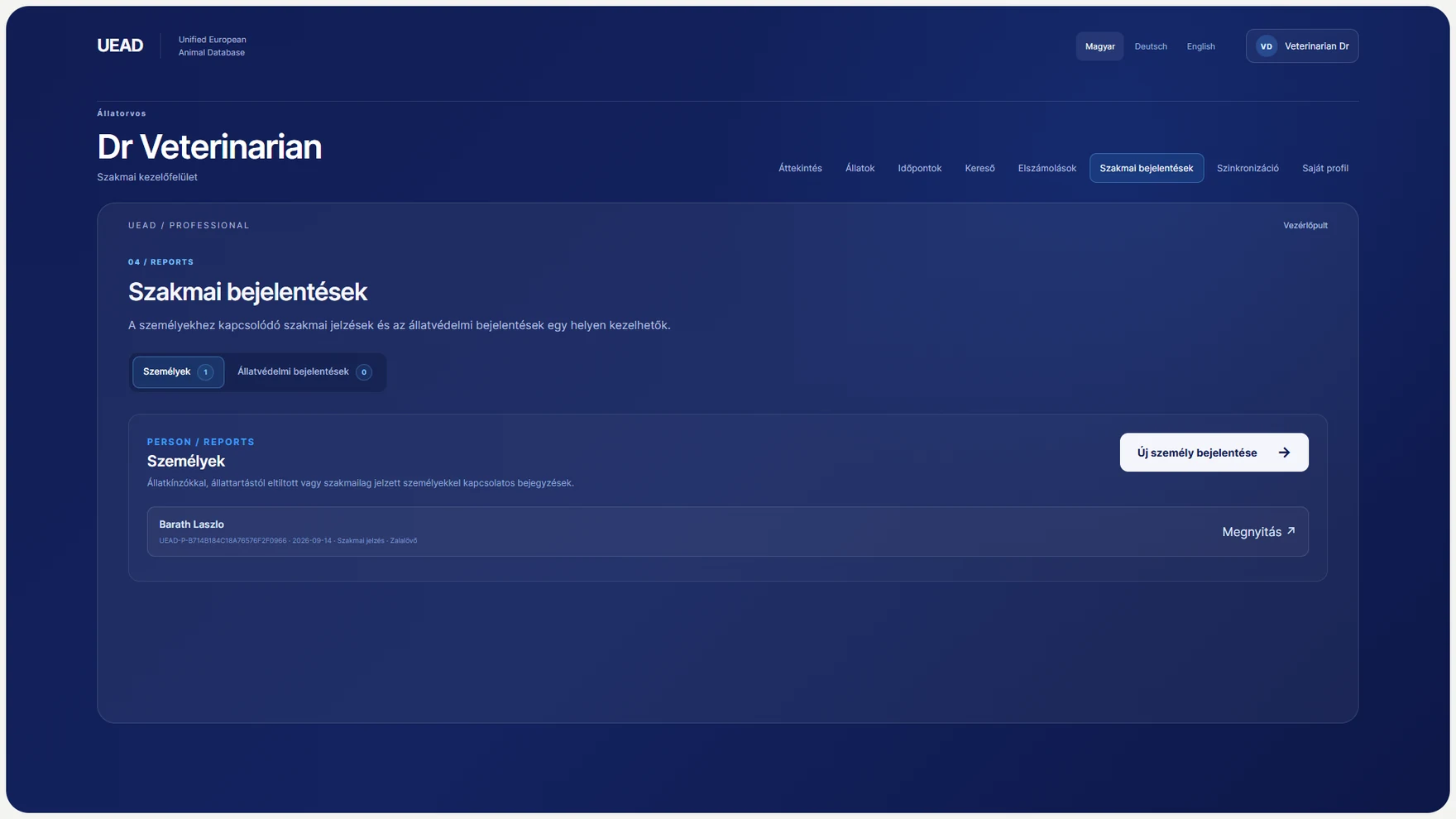
People involved, documents, status changes and events remain linked to the same case so it is possible to reconstruct what happened and where the process stands.
UEAD core functionality is being designed for free use. Better records and collaboration should be available to small shelters and individual keepers as well as larger organisations.
Animals, medical history, status and access settings in one place.
Animals, livestock, reports and traceable cases in one shared system.
Search, medical collaboration, appointments and permission-based relationships.
Free access does not mean unrestricted data access: personal, professional and sensitive information remains controlled by roles and permissions.
Through a documented API, UEAD can provide a shared data foundation for external web and mobile applications. Adoption, shelter or professional services can build on authorised UEAD data instead of creating another isolated registry.
The list below summarises UEAD’s user-facing and developer capabilities. Search by topic and open any feature for more detail.
UEAD is being built as free-to-use shared animal-welfare infrastructure where keepers, organisations, professionals and external applications do not manage isolated copies of the same information.
Sign in